Ovulation Tracking and Your Fertile Window: The Complete Science-Based Guide


Ovulation Tracking and Your Fertile Window: The Complete Science-Based Guide
Understanding ovulation tracking and identifying your fertile window is one of the most effective things you can do to improve your chances of conceiving. Despite common assumptions, the fertile window is surprisingly brief — just 5–6 days per cycle — and many couples unknowingly time intercourse outside this window. This comprehensive guide provides a science-based explanation of how ovulation works, the best methods to track it accurately, and how European couples are using modern monitoring tools alongside fertility-supportive products like Conceive Plus to maximise their chances of conception each month.
Understanding the Female Cycle and When Ovulation Occurs
The menstrual cycle is divided into several phases, each governed by a carefully orchestrated hormonal sequence:
Follicular phase (days 1–13 in a 28-day cycle): Begins on the first day of menstruation. FSH (follicle-stimulating hormone) from the pituitary gland stimulates several follicles in the ovaries to develop. Typically, one dominant follicle emerges and grows, producing increasing amounts of oestrogen.
Ovulation (around day 14): Rising oestrogen from the dominant follicle triggers a surge of LH (luteinising hormone). This LH surge is what ovulation predictor kits (OPKs) detect. The LH surge triggers the follicle to rupture and release the mature egg within 24–36 hours of the surge beginning.
Luteal phase (days 15–28): After ovulation, the ruptured follicle becomes the corpus luteum, which produces progesterone. Progesterone prepares the uterine lining for implantation and maintains early pregnancy if conception occurs. If the egg is not fertilised, the corpus luteum degenerates, progesterone drops, and menstruation begins.
The key point for ovulation tracking: ovulation occurs once per cycle, and the released egg survives for only 12–24 hours. The fertile window includes the 5 days before ovulation (because sperm can survive in fertile cervical mucus for 3–5 days) plus the day of ovulation itself — giving a window of approximately 6 days per cycle.
✨ Maximise Every Fertile Day with Conceive Plus
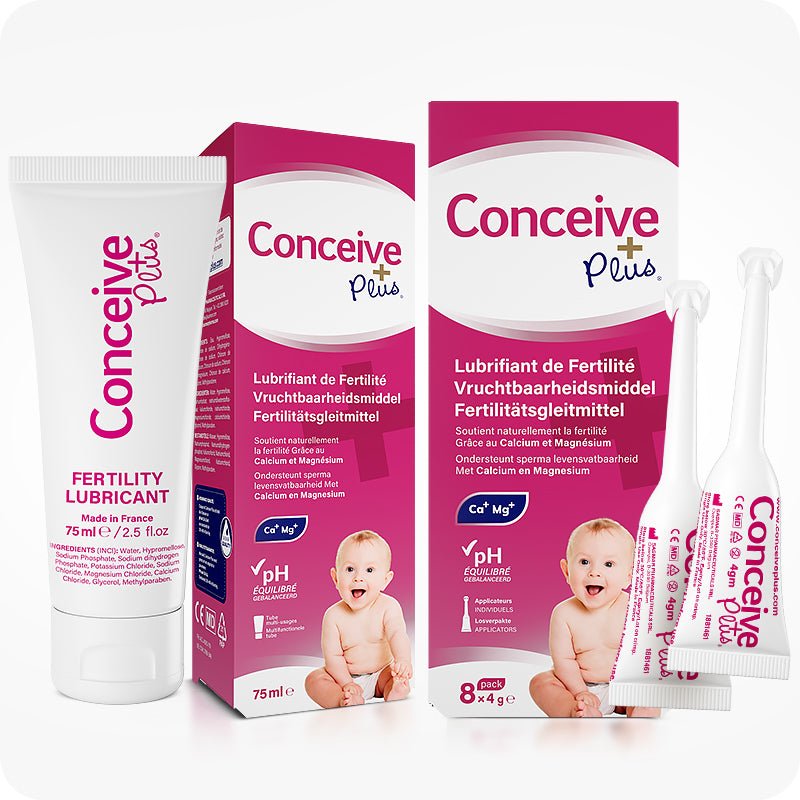
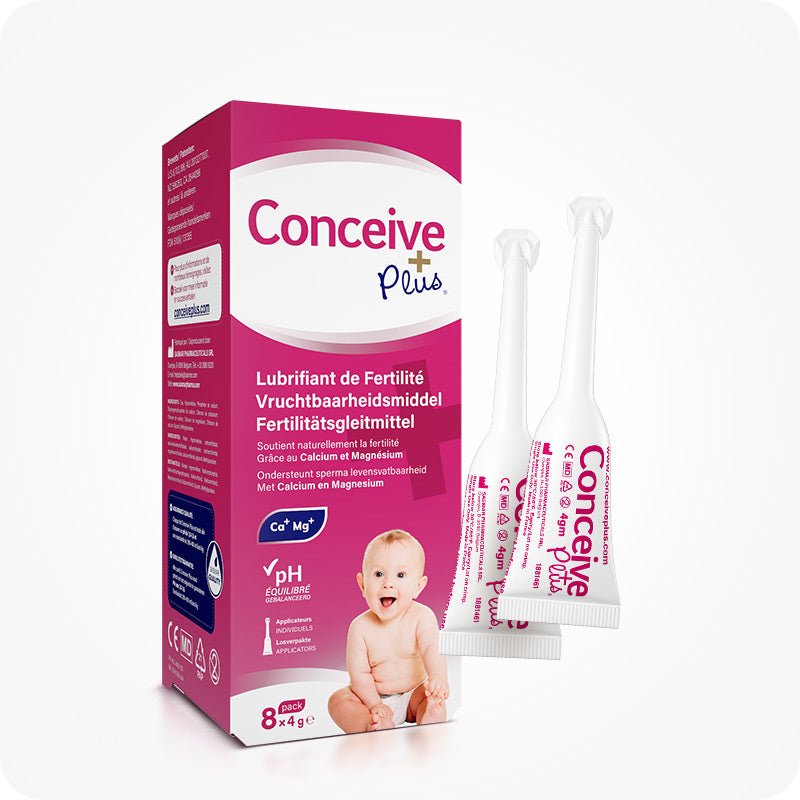
Once you know your fertile window, make the most of it with Conceive Plus fertility lubricant — pH-matched to fertile cervical mucus, with sperm-supporting calcium and magnesium ions. Shop Now →
Methods for Ovulation Tracking: A Detailed Comparison
Basal Body Temperature (BBT)
BBT tracking involves measuring your temperature first thing in the morning before getting out of bed, speaking, or eating — with a basal body thermometer accurate to 0.1°C. After ovulation, the corpus luteum's progesterone production causes a sustained rise of approximately 0.2–0.4°C that persists until menstruation. The challenge with BBT: the temperature rise occurs after ovulation, confirming it happened rather than predicting it. BBT is most useful for understanding your cycle pattern over several months.
Ovulation Predictor Kits (OPKs)
OPKs detect the LH surge in urine, typically 24–36 hours before ovulation. Standard OPKs use a threshold-based positive/negative system. Digital OPKs show a smiley face for high or peak fertility. Advanced OPKs like Clearblue Advanced track both LH and oestrogen (via LH and oestrone-3-glucuronide), giving a 4-day fertile window indication — 2 days of High (rising oestrogen) and 2 days of Peak (LH surge detected). OPKs are the most practical and widely used ovulation tracking tool for European couples.
Cervical Mucus Monitoring
As oestrogen rises through the follicular phase, cervical mucus changes in predictable ways. After menstruation, discharge is typically dry or sticky. As ovulation approaches, mucus becomes increasingly creamy, then watery, then at peak fertility takes on a raw egg-white consistency: clear, stretchy (up to several centimetres when stretched between fingers), and slippery. This fertile-quality mucus (called EWCM — egg-white cervical mucus) creates an optimal environment for sperm survival and transport toward the egg.
Fertility Monitors
Advanced fertility monitors like the Clearblue Connected Fertility Monitor track multiple hormones (LH, oestrogen, and some newer models include progesterone metabolites) and use an algorithm to personalise predictions based on your unique cycle. These provide the most accurate ovulation window identification and are particularly useful for women with irregular cycles or PCOS where the LH surge can be difficult to detect with standard OPKs.
The Fertile Window: When Should You Have Intercourse?
Research on the fertile window comes from several key studies. The Wilcox et al. (1995) study in the New England Journal of Medicine mapped the fertile window in 221 women with 625 menstrual cycles using daily urine hormone measurements. Key findings:
- The fertile window spans 6 days: the 5 days before ovulation and the day of ovulation
- Peak fertility is on the 2 days before ovulation and the day of ovulation itself
- In regular 28-day cycles, ovulation occurs on day 14 on average — but with wide individual variation (day 11 to day 21)
- Even in women with regular cycles, ovulation day varies by 2–3 days cycle-to-cycle
This last point is crucial for ovulation tracking: even if you have regular 28-day cycles, you cannot assume ovulation always happens on day 14. Tracking each cycle individually is essential for optimal timing.
For conception, the evidence supports having intercourse every 1–2 days throughout the identified fertile window — not just on the predicted ovulation day. This strategy ensures sperm are present and waiting when the egg is released, maximising the probability of fertilisation.
Irregular Cycles and Ovulation Tracking
Women with cycles shorter than 24 days or longer than 35 days, or with significant cycle-to-cycle variability (more than ±7 days), face greater challenges with ovulation tracking. Common causes include PCOS, thyroid dysfunction, hyperprolactinaemia, perimenopause, stress, and low body weight.
Women with irregular cycles should start OPK testing early in the cycle (day 7–8) and test twice daily during the most likely fertile window. A combination of OPKs plus BBT is particularly valuable for identifying the actual ovulation day in irregular cycles.
The Role of Fertile Cervical Mucus and Fertility Lubricants
Fertile-quality cervical mucus plays a critical role in conception that is often overlooked. This specialised mucus protects sperm from the acidic vaginal environment, provides nutrients that sustain sperm during their 3–5 day wait, and contains capacitation-stimulating ions (calcium, potassium) that help sperm undergo the final changes needed to fertilise an egg.
Many women experience insufficient cervical mucus from dehydration, antihistamine use, hormonal contraceptive history, cervical procedures, or simply individual variation. This is where fertility lubricants become important.
Conceive Plus lubricant is uniquely formulated to replicate the properties of fertile cervical mucus: matching pH (7.0–7.8), osmolality (280–380 mOsm/kg), and containing calcium and magnesium ions that actively support sperm function. This makes it fundamentally different from standard lubricants, which can damage sperm on contact and reduce per-cycle conception probability.
Ovulation Tracking Apps: Are They Accurate?
Fertility tracking apps like Clue, Natural Cycles, Flo, and Glow have become extremely popular across Europe. A 2019 review in BJOG found that calendar-based app predictions were accurate for cycle length but had significant error in predicting the specific day of ovulation — sometimes by 4 or more days. Apps that incorporate actual BBT data or hormone readings (like Natural Cycles) perform significantly better.
The recommendation: use an app as a convenient tracking tool, but do not rely on it alone for timing. Combine app data with actual OPK testing for the most reliable fertile window identification.
Ovulation After Stopping Hormonal Contraception
A common question from European couples is how long it takes for ovulation to resume after stopping the contraceptive pill or other hormonal methods:
- Combined pill: Ovulation typically resumes within 1–3 months
- Progestogen-only pill: Ovulation often resumes within weeks
- Hormonal IUD (Mirena): Ovulation resumes quickly after removal, often within the first cycle
- Injectable contraception (Depo-Provera): Can take 6–18 months for ovulation to fully resume
- Implant: Ovulation usually resumes within 1–3 months of removal
During the first few cycles after stopping hormonal contraception, cycles may be longer or shorter than usual, and ovulation timing may be unpredictable. This makes OPK testing particularly valuable during this transition period.
Frequently Asked Questions: Ovulation Tracking
How do I know if I am actually ovulating?
The most reliable confirmation is a positive LH test (OPK) followed by a sustained BBT rise of at least 10 days. Some GPs can also measure a mid-luteal progesterone level to confirm ovulation occurred.
Can I ovulate more than once per cycle?
No — in almost all cases, only one ovulation event occurs per cycle. However, two eggs can be released within 24 hours of each other (the same LH surge), which is how fraternal twins occur.
Can stress prevent ovulation?
Yes. Psychological stress elevates cortisol and can disrupt GnRH pulsatility, suppressing the LH surge and preventing ovulation. Chronic stress is associated with longer, irregular cycles and anovulation.
What if my OPK never shows a positive result?
If you have been testing correctly for a full cycle and never see a surge, it is possible you have anovulatory cycles. See your GP for investigation — hormone panel (FSH, LH, oestradiol, prolactin, AMH, thyroid) and an ultrasound can identify the underlying cause.
How many days should I have intercourse during my fertile window?
Research suggests having intercourse every 1–2 days throughout the fertile window maximises conception chances. Daily intercourse during the fertile window is not shown to be significantly better than every-other-day, as sperm counts recover quickly.
Can ovulation tracking help with PCOS?
Yes — although OPK interpretation is more complex with PCOS because LH levels can be chronically elevated, causing false positives. Advanced digital OPKs that also track oestrogen are more reliable for PCOS cycles.
How long does the egg survive after ovulation?
The released egg survives for 12–24 hours. This is why timing intercourse in the days BEFORE ovulation — when sperm are already present and waiting — is at least as important as intercourse on ovulation day itself.
Does age affect ovulation tracking?
Age does not typically change ovulation tracking method accuracy, but it does affect what you observe: cycles may become slightly shorter as ovarian reserve declines, and anovulatory cycles become more common in the late 30s and 40s.
What is the best ovulation tracking method for irregular cycles?
For irregular cycles, combining OPKs (starting testing early) with BBT charting gives the most reliable results. Advanced fertility monitors designed for cycle variability provide even greater accuracy.
Should I use a fertility lubricant during the fertile window?
Yes. Using a sperm-safe fertility lubricant like Conceive Plus during intercourse in the fertile window protects sperm from lubricant-induced damage and, with its calcium and magnesium ion formula, actively supports sperm function en route to the egg.
Make the Most of Your Fertile Window
Conceive Plus fertility lubricant and supplements are trusted by couples across Europe. Pair your ovulation tracking with the right fertility support.
Shop Conceive Plus Europe →